Grafted In For Generosity: Week 12 of Ordinary Time
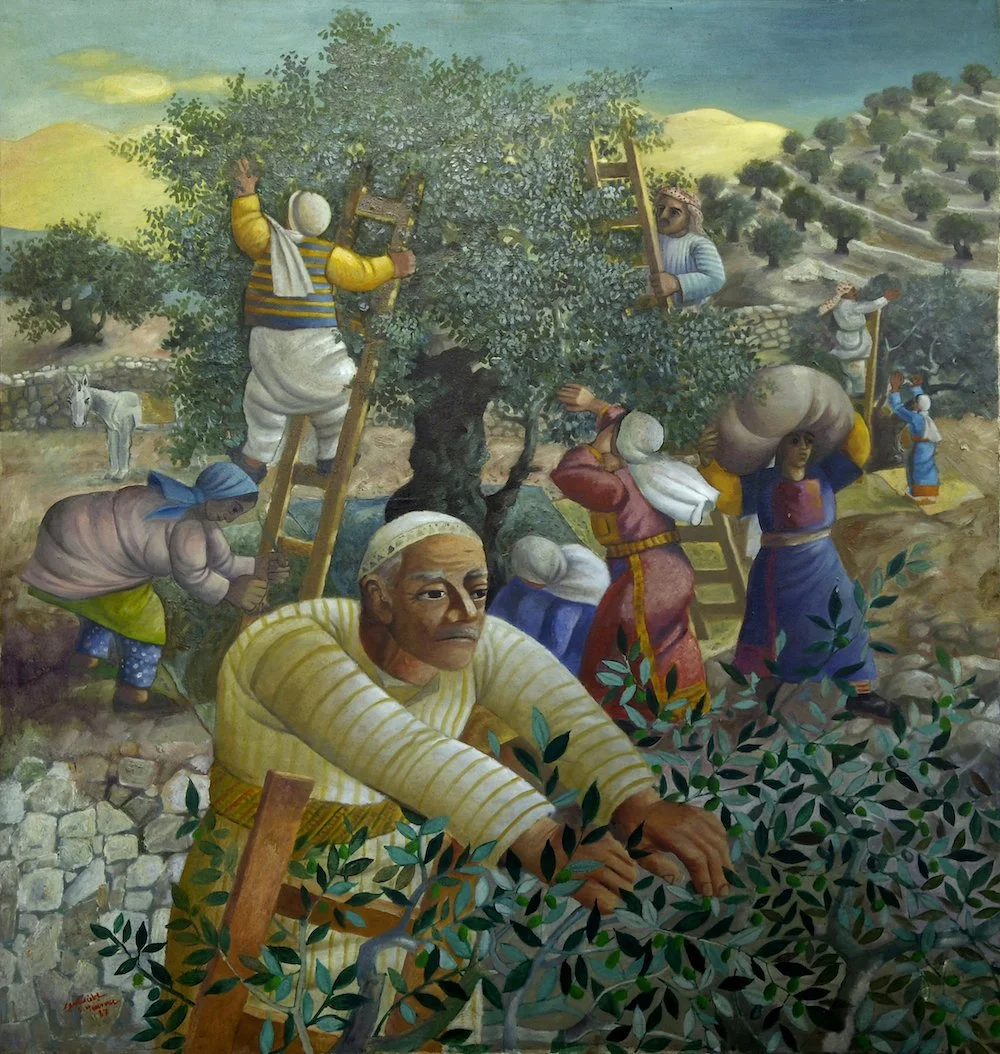
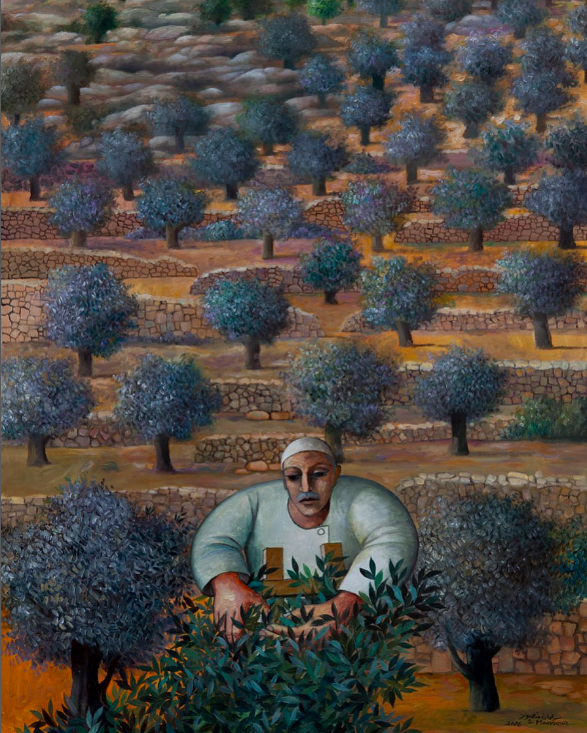
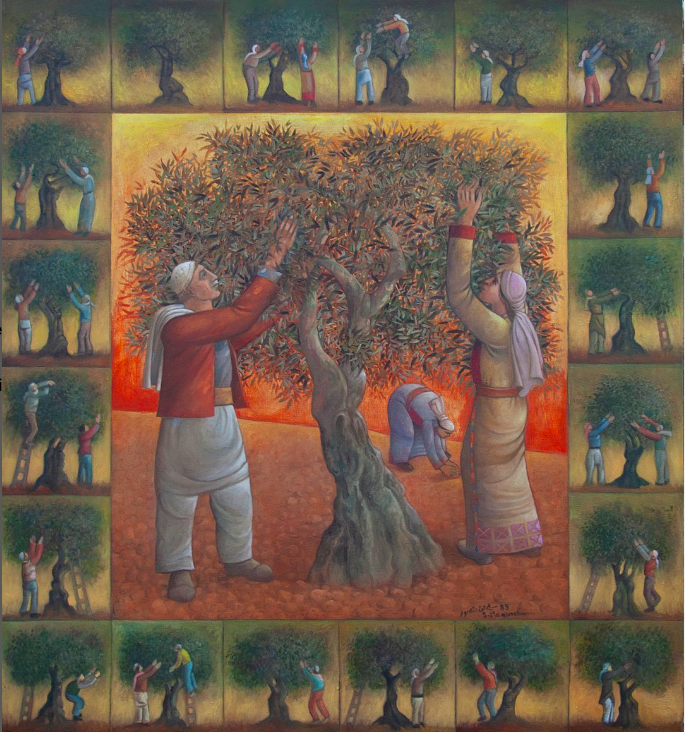
LOOK: Picking Olives, Sliman Mansour - Source, & Olive Harvest, 1985 - Source, & Olive Harvest, 2016 -Source
Read a beautiful commentary on this contemporary Palestinian artist here. See more of Sliman Mansour’s work on Instagram
I also found this Arab News article featuring Sliman Mansour’ artwork enlightening: How the olive tree came to symbolize Palestinian national identity
Excerpt: “It is not only the fruit and its oil that the olive tree contributes to the cultural and economic life of Palestine. Olive pits, the hard stones in the center of the fruit, have long been repurposed to make strings of prayer beads used by Muslims and Christians alike.
As for the leaves and branches of the trees, they are trimmed during the harvest season to be used as feed for sheep and goats, while the broad canopy of the olive grove provides animals and their shepherds with welcome shade from the relentless afternoon sun.
The wood of felled trees has also been widely used in the carving of religious icons as far back as the 16th century, and as a source of firewood before the modern profusion of gas. In fact, the glassmakers of Hebron, who are famed for their stained glass, continue to use charcoal derived from olive trees to fire their kilns.
While the quantifiably beneficial uses of the olive tree are many, perhaps what is even more valuable to Palestinians is the inspiration it has provided to poets, painters and prophets down the ages….”
LISTEN: We Abide, We Abide in You, The Porter’s Gate, feat. Paul Zach - Lyrics & Lead Sheets |Spotify | YouTube
I made us a new playlist! Listen here: Ordinary Time, pt. 2: Love My Neighbor and Myself
READ: Isaiah 56:1–8, Psalm 67, Romans 11:13–24, Matthew 15:21–28
Readings for the rest of the week*: Psalm 112; Genesis 13; Matthew 20:1-16; Luke 21:1-4; Romans 12:1-13
(The weekly readings during Ordinary Time are a thematic survey from the Daily Office Lectionary curated by Bobby Gross in Living the Christian Year. If you’d prefer to keep track with the Daily Office Lectionary from the 1979 BCP, you can find those passages here.)
PRAY: Book of Common Prayer, Collect for the Twelfth Week After Pentecost
Keep your Church, O Lord, by your perpetual mercy; and because without you the frailty of our nature causes us to fall, keep us from all things hurtful, and lead us to all things profitable for our salvation; through Jesus Christ our Lord, who lives and reigns with you and the Holy Spirit, one God, for ever and ever. Amen.
READ: An excerpt from The Spacious Path, Part 3 (pp. 208 - 209)
SPACIOUS HOSPITALITY
What spacious hospitality is and what spacious hospitality is not
Saying yes to spacious hospitality involves vulnerability and risk. Rather than looking for Christ in each stranger, we train our eyes to see Christ between us and all strangers. We trust that in loving Christ, our love for the stranger will be put to good ends even when the love we give is not returned or, worse, when the love we share is exploited. That is why this spacious offer of hospitality requires the wisdom and safekeeping of the community.
Saying yes to spacious hospitality nurtures the welcoming presence we desire for all of our relationships. We recognize that parenting is hospitality, friendship is hospitality, our interactions at work and with our neighbors are acts of hospitality, and how we care for ourselves is an act of hospitality.
Saying yes to spacious hospitality energizes our humble, prayerful listening to God, others, and ourselves. When we listen to another person’s story—without interruption or agenda—we offer a profound act of hospitality. When we mourn with those who are weeping and rejoice with those who are celebrating, we keep company with Jesus and others.
We keep company with Jesus when we love our enemies and forgive those who have wronged us. We keep company with Jesus when we offer embodied presence to the outcast and the lonely. Even more radically, we receive hospitality in the places where the poor and the sick and prisoners and the lonely dwell. This is what it means to say yes to spacious hospitality.
Jesus never intended for us to walk through the earth as private benefactors, operating from our capacity to discern who deserves our hospitality and who doesn’t. Personal hospitality is a limited, finite resource. On our own, we can meet some needs and welcome some strangers. This is not meaningless, but it is fixed. When we expand our vision to the hospitality we offer as a community, we find abundance rather than scarcity.
DO: This week, consider how one response to God’s incalculable grace is to extend that bounty to our neighbors.
At first glance and without analyzing your answers, which of the statements about spacious hospitality are you most drawn to? Which are you least drawn to?
In the lavish generosity of God’s presence with you, consider the following question: Where do you have an opportunity to be generous this week with your money, time, or God-given abilities?
*During Ordinary Time this year, I’ll be curating the weekly themes, music, readings, and practices from four sources:
Sunday lectionary readings from Year A of the Book of Common Prayer 2019 (Anglican Church of North America).
Weekly themes and select lectionary readings from the excellent devotional guide, Living the Christian Year: Time to Inhabit the Story of God by Bobby Gross
Weekly song to meditate from the sacred ecumenical arts collective, The Porter’s Gate because it feels like they’ve curated their discography to coordinate with the themes of Ordinary Time in Living the Christian Year!
Weekly readings and suggested practices from my book The Spacious Path: Practicing the Restful Way of Jesus in a Fragmented World because I was definitely influenced by Living the Christian Year! While it’s not necessary to purchase the book to follow along with us, I’d be grateful if you did!