Facing Persecution: Week 4 of Ordinary Time
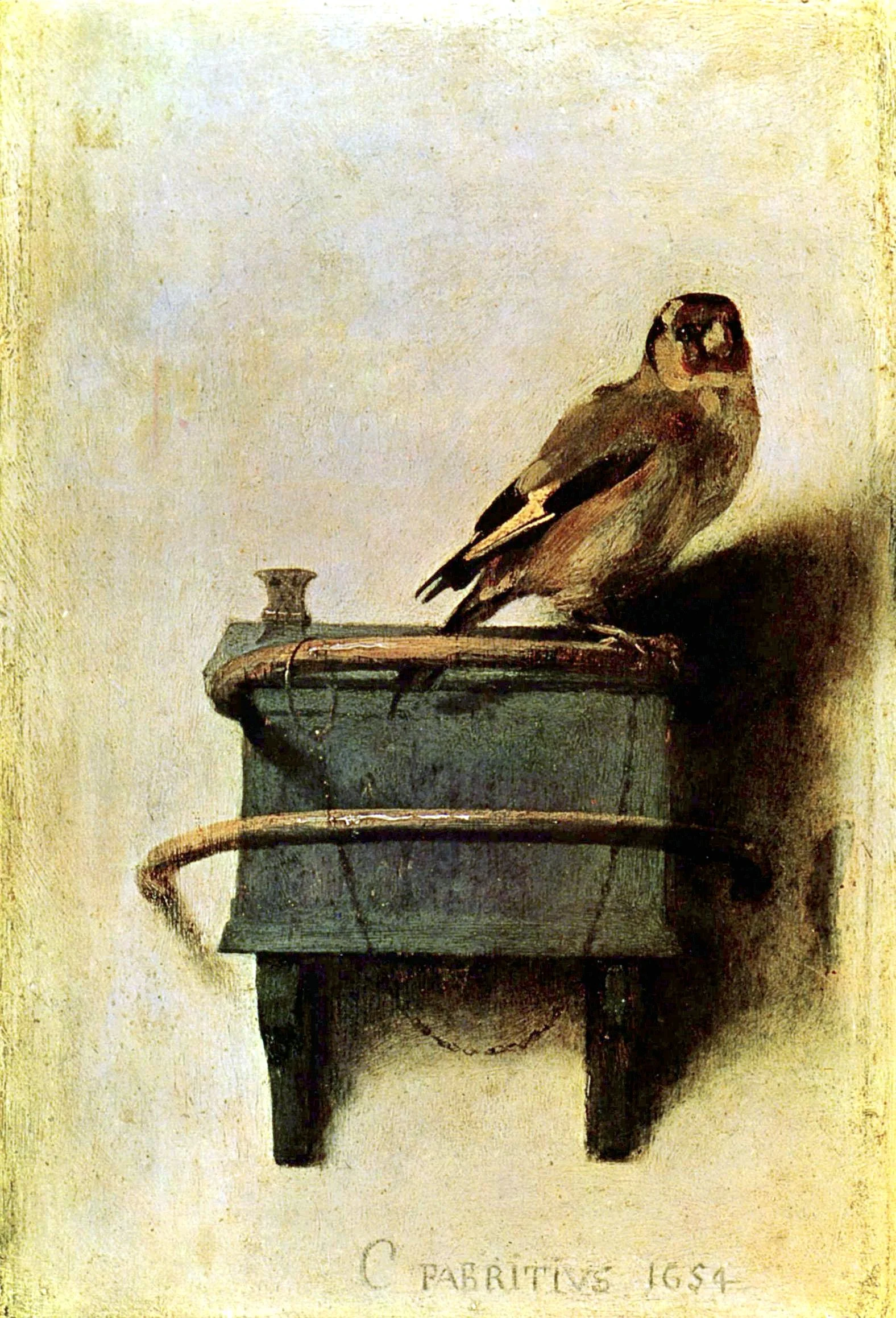
We’re in the season of Ordinary Time - the long stretch of weeks between Pentecost and Advent. If the historic liturgical calendar teaches us to number our days to gain a heart of wisdom, there must be a lot of wisdom to be gained in our regular, working, resting, and worshipping lives. This is the model Christ seemed to have lived, and the church invites us to embrace the same pathway.
LOOK: Thistlefinch, Carl Ferdinand Fabritius, Source
LISTEN: Nothing to Fear, feat. Audrey Assad - Lyrics | Spotify | YouTube
Here’s a playlist I made for us a few years ago! Ordinary Time, pt. 1: Worship God in the World and Church
READ: Jeremiah 20:7–13; Psalm 69:1–15; Romans 5:15b–19; Matthew 10:16–33
Readings for the rest of the week*: Psalm 56; 1 Kings 16:29-17:7, 19:1-18; Luke 4:14-30; Acts 5:12-42; 2 Corinthians 4:5-15
(The weekly readings during Ordinary Time come from Living the Christian Year by Bobby Gross. If you’d prefer to keep track with the Daily Office Lectionary from the 1979 BCP, you can find those passages here.)
PRAY: Book of Common Prayer, Collect for the Fourth Week After Pentecost
Lord of all power and might, the author and giver of all good things: Graft in our hearts the love of your Name, increase in us true religion, nourish us with all goodness, and bring forth in us the fruit of good works; through Jesus Christ our Lord, who lives and reigns with you and the Holy Spirit, one God, for ever and ever. Amen.
READ: An excerpt from The Spacious Path, Part 3, (pp. 136-138)
As we navigate the everyday impacts of global disruption and suffering, we’re experiencing profound disorientation in the world around us and within our souls. One attention-grabbing headline published in December 2022—“School Principals Say Culture Wars Made Last Year ‘Rough as Hell’—accompanies an article by NPR writer Cory Turner that depicts the workplace tensions between principals, teachers, and students’ parents, describing the level of parent/community conflict they saw during the previous year as “either ‘more’ or ‘much more’ than anything they’d seen before the pandemic.” In what’s become known as the Great Resignation, “quit rates” reached a twenty-year high in November 2021. In December 2021 alone, 4.3 million Americans left their jobs, and record highs continued into early 2022. Those who have remained with their jobs have navigated the moving target of workplace protocols while simultaneously “double shifting” care for children or elderly parents. Added to vocational disorientation, we’re also navigating new landscapes in our relationships at home, church, and with extended family members. In his book Fault Lines: Fractured Families and How to Mend Them, published in September 2020, Cornell professor Karl Pillemer offers his findings from the first large-scale national survey about family estrangement. In the study, Pillemer found that 27 percent of Americans ages eighteen and older had cut off contact with a family member, which translates to at least 67 million people nationally—likely an underestimate, Pillemer said, since some are reluctant to acknowledge the problem.5 In an op-ed for the New York Times, columnist David Brooks wrote, “The percentage of Americans who say they have no close friends has quadrupled since 1990, according to the Survey Center on American Life.”
Real people—including many of us reading this book— are finding it harder to get through our everyday work and relationships “mindfully and fruitfully.” Parts of our lives feel uprooted and irreparable. How might a Rule of Life help us remain present to the ordinary, everyday reality of our lives at work and home even during seasons when our lives are full of unthinkable realities? In 2021, author and Benedictine sister Joan Chittister offered this well-timed invitation:
When old social structures are collapsing around you and new ones are badly needed . . . When your own person- al spiritual life is seeking new direction and your soul is thirsting for higher and deeper purpose and pursuit, mo- nasticism offers an age-old path still new, still vibrant.
Unlike the swings toward spiritual extremism and perfectionism that shook the Church as the centuries went by, the Rule of Benedict offers normalcy as the will of God. This is a guide, a way to heaven, that asks only what is doable.
To Chittister’s description of the Rule as a “way that asks only what is doable,” I’d add “in the reality of our lives.” Bishop Todd Hunter, a spiritual leader who has deeply influenced my understanding of the restful way of Jesus, writes “Reality . . . is always our trustworthy, supportive friend. God lives and moves and has his being in that which is real. Because God dwells in reality, our relationship with him can only happen there.” In Romans 12, Paul summons us to offer every routine of our daily lives in worship to the God who “dwells in reality.” For centuries, Christians have been using a Rule of Life to orient them within—rather than help them escape or ignore—the reality of their lives.
It’s true that when Jesus asks us to learn from him, we are surrendering to unknown, sometimes extraordinary, acts of worship. In scripture we see Jesus fasting in the wilderness for forty days, casting out demons, resurrecting the dead, and dying by public crucifixion; we understand these responses as acts of obedience and worship to God. But Jesus also lived for thirty-three years—most of it unwritten in scripture— worshiping God with his everyday working, sleeping, and eating life. The majority of our Rule of Life will consist of these ordinary activities, too. Tending to the actual shape of our everyday lives is what makes a Rule of Life a spacious and unforced path.
DO: This week, we’re thinking about the kingdom reality of persecution. In the safety of God’s presence, ask the Spirit to help you prayerfully sit with the following questions:
Where am I facing persecution of any sort?
In the humility of Apostle Paul: When have I stood by while others have been persecuted?
When have I been the persecutor?
Conclude this time by reading 2 Corinthians 4:5-15 out loud as a prayer. Let the examples of the scriptures we’re reading this week strengthen your resolve to speak of Christ even at the risk of ridicule, derision, or discrimination.
During Ordinary Time this year, I’ll be curating the weekly themes, music, readings, and practices from four sources:
Sunday lectionary readings from Year A of the Book of Common Prayer 2019 (Anglican Church of North America).
Weekly themes and select lectionary readings from the excellent devotional guide, Living the Christian Year: Time to Inhabit the Story of God by Bobby Gross
Weekly song to meditate from the sacred ecumenical arts collective, The Porter’s Gate because it feels like they’ve curated their discography to coordinate with the themes of Ordinary Time in Living the Christian Year!
Weekly readings and suggested practices from my book The Spacious Path: Practicing the Restful Way of Jesus in a Fragmented World because I was definitely influenced by Living the Christian Year! While it’s not necessary to purchase the book to follow along with us, I’d be grateful if you did!