The Embracing and Reconciling Community: Week 7 of Ordinary Time
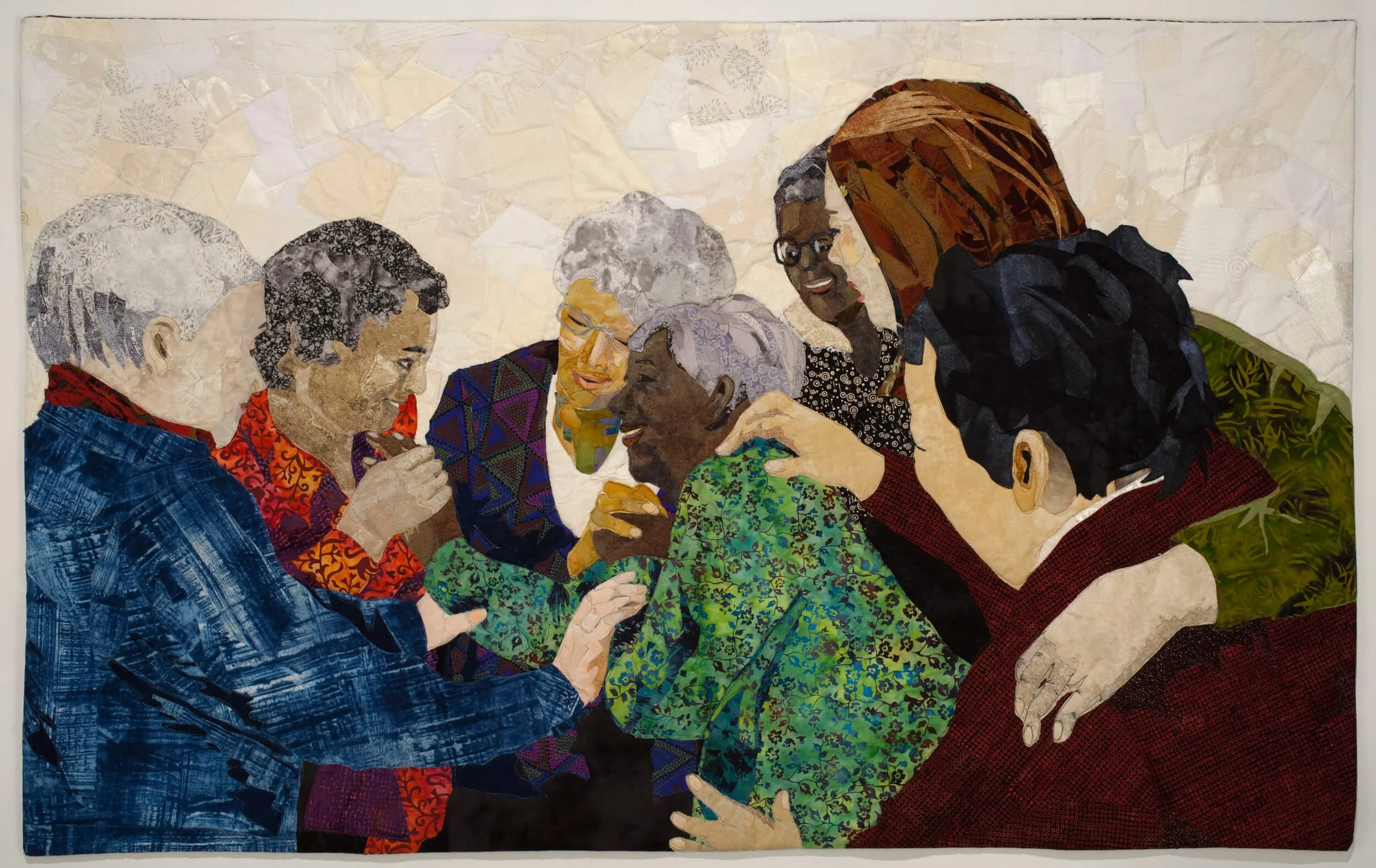
LOOK: Circle of Friends, Alice Beasley - Source
LISTEN: Instrument of Peace, The Porter’s Gate - Lyrics & Lead Sheets | Spotify | YouTube
Here’s a playlist I made for us a few years ago! Ordinary Time, pt. 1: Worship God in the World and Church
READ: Isaiah 55; Psalm 65; Romans 8:7–17; Matthew 13:1–9, 18–23
Readings for the rest of the week: Psalm 133; Jonah 1-4; Luke 7:1-10; Acts 10:1-11:18; Colossians 3:1-17; Philemon
(The weekly readings during Ordinary Time are a thematic survey from the Daily Office Lectionary curated by Bobby Gross in Living the Christian Year. If you’d prefer to keep track with the Daily Office Lectionary from the 1979 BCP, you can find those passages here.)
PRAY: Book of Common Prayer, Collect for the Seventh Week After Pentecost
Let your merciful ears, O Lord, be open to the prayers of your humble servants; and, that we may receive what we ask, teach us by your Holy Spirit to ask only those things that are pleasing to you; through Jesus Christ our Lord, who with you and the same Spirit lives and reigns for ever and ever. Amen.
READ: An excerpt from The Spacious Path, Part 3 (pp. 213-215)
SPACIOUS REPENTANCE
In the summer of 2020, my friend and fellow spiritual director Vernée Wilkinson spoke at a series of retreats I was leading entitled “Spiritual Practices for Living as an Antiracist Person.” The idea for the retreats began earlier that summer when Vernée and Ted Wuest, a faculty member from the organization where we received our training, collaborated to translate the examen, an ancient contemplative prayer from Saint Ignatius, into a real-time examination of conscience for white Christians. Vernée sent the prayer, entitled A Daily Examen for Living as an Antiracist Person, to our spiritual direction colleagues three weeks after George Floyd, a forty-six-year-old Black man was murdered by a white police officer in Minneapolis, Minnesota; and three months after Breonna Taylor, a twenty-six-year-old Black woman was fatally shot when seven police officers entered her Louisville, Kentucky, apartment; and four months after Ahmaud Arbery, a twenty-five-year-old Black man was murdered during a racially motivated hate crime in Brunswick, Georgia.
The small group of mostly white women who participated in the retreat series committed to praying the daily examen Vernée had written and then meeting virtually three times throughout the summer to sit together in silence and lament. Each time we met, Vernée joined our video call for about a half hour to generously offer us her lived experience as a Black woman. During one of our conversations, I asked Vernée if listening, learning, lamenting, and living differently happen in a chronological order. She responded that while the recent headlines were prompting a lot of white communities to say, “We’re really listening now,” speaking for herself as a Black woman, “it’s been hard to hear that because historically and personally, there’s been plenty of accounts on the record that have been wildly inappropriate... and not that different from what George Floyd experienced.” She went on to say:
Listening can be done while accountability is being taken, while forward action is being taken, and also while under- standing that it’s not necessarily going to be perfect work and having the humility that there might be some missteps in your work of being an antiracist person . . . don’t let that stop the work. . . . This is about a work of justice and we serve a just God so it’s a little bit too easy to get caught in the feelings and attempt toward perfection. To do antiracist work, there has to be room for error, and just trusting we can continue to work through it together.
As I listened to Vernée, I began to understand a more holistic perspective for repentance—one that makes space for listening, lamenting, learning, and living differently all at the same time. In God’s mercy and in the restful way of Jesus, repentance turns us around, and reorients us in the direction of the vulnerable.
DO: This week, consider adding the Daily Examen for Living as an Antiracist Person (described above) to your prayer practice as we’re thinking about what it means to belong to Christ’s embracing and reconciling community. In the safety of God’s presence, ask the Spirit to help you prayerfully sit with the following questions from Living the Christian Year (p. 261):
Is there any group of persons different from you—in race, culture, social background, sexual orientation, politics, education—that you find difficult to fully accept and freely love?
*During Ordinary Time this year, I’ll be curating the weekly themes, music, readings, and practices from four sources:
Sunday lectionary readings from Year A of the Book of Common Prayer 2019 (Anglican Church of North America).
Weekly themes and select lectionary readings from the excellent devotional guide, Living the Christian Year: Time to Inhabit the Story of God by Bobby Gross
Weekly song to meditate from the sacred ecumenical arts collective, The Porter’s Gate because it feels like they’ve curated their discography to coordinate with the themes of Ordinary Time in Living the Christian Year!
Weekly readings and suggested practices from my book The Spacious Path: Practicing the Restful Way of Jesus in a Fragmented World because I was definitely influenced by Living the Christian Year! While it’s not necessary to purchase the book to follow along with us, I’d be grateful if you did!